Prassas Capital

Independent, fiduciary guidance for investors reinvesting 1031 proceeds in Delaware Statutory Trusts

“I’d love to sell our property, if only I knew what to do with the money.”

“If we sell outright, our aggregate tax bill will exceed 40%.”

“I am tired of being a landlord. I would rather travel.”

“Our commercial real estate is too concentrated. I wish we could diversify like our retirement accounts.”

“My kids will struggle to manage my real estate. Is there a way to simplify my estate?”

“My parents moved into assisted living. They need truly passive income.”

Selling the property is the easy part. Deciding where the proceeds go is not.

A 1031 exchange gives you
45
days to identify
replacement property
180
days to close
For many owners, a DST is the right destination
Institutional-grade real estate
Professional management
Income that no longer depends on you

Choosing which DST, and which sponsor, is where independent judgment matters. That is the only work we do.

Owners tired of being landlords

You have built equity over decades. Now you would rather travel than manage tenants. We help you move to truly passive income without triggering the tax bill.

Couples planning for a surviving spouse

When the spouse who manages the property is ill or elderly, the other will need income that does not depend on running buildings.

Simplifying an estate for the next generation

Your children inherit professionally managed interests, not properties they must learn to run, divide or sell under pressure.

Owners with concentrated real estate

One or two properties can hold most of a family’s net worth. A DST portfolio spreads that across property types, markets and sponsors, the way you already diversify your securities.

The record behind the advice

Forty years underwriting institutional finance,
including the years it went wrong.

After 2008, Nick spent a decade working through the restructurings and bankruptcies of the sponsors that failed, on behalf of the investors left holding them. Judgment about a DST offering is only worth what the person making it has lived through, and that decade is what stands behind every recommendation.

Forty years

In institutional investment banking and private equity, financing public infrastructure, hospitals, universities and nonprofits.

Since 2004

Advising on fractional real estate for 1031 exchanges, from the year the IRS ruling made the DST structure viable.

Through 2008

A decade of workouts with failed sponsors and the investors left in them. It is what shapes how every offering gets underwritten today.

“Clients are not shopping for tools. They are struggling to solve problems. We see ourselves as carpenters. Financial carpenters. With maybe nicer clothes.”

The basics

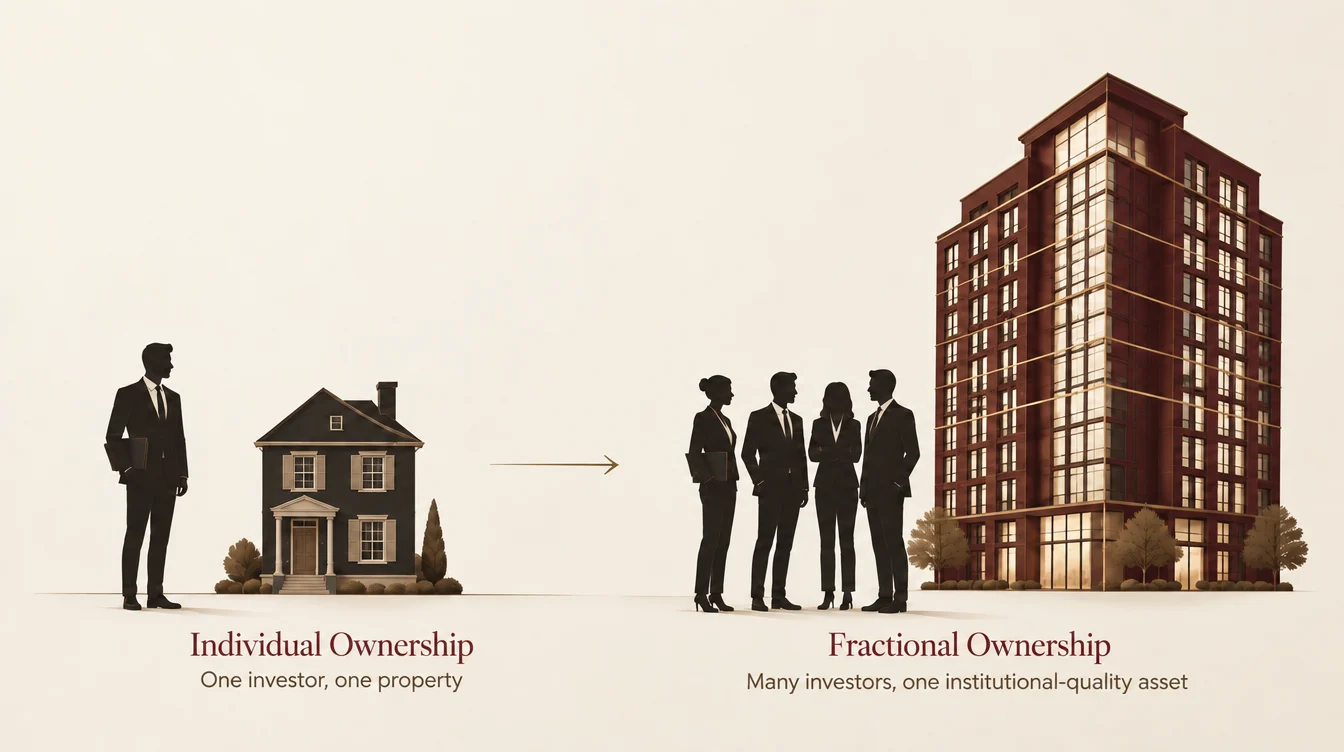
What is a Delaware Statutory Trust?

  • A legal entity, formed under Delaware law, that holds title to investment real estate.
  • Investors buy beneficial interests in the trust, not the property itself.
  • Under IRS Revenue Ruling 2004-86, a properly structured DST interest qualifies as like-kind replacement property in a 1031 exchange.
  • The sponsor acquires the property, arranges the financing and manages it.
  • Investors receive their share of the net income while the trust holds the property, and their share of the proceeds when it is sold.
Passive ownership

The sponsor handles leasing, operations and reporting
No management role for investors
Mortgage financing is typically non-recourse to investors

Institutional-grade property

Property of a size and quality few individual owners could acquire alone: apartment communities, industrial buildings, medical offices, net-leased retail.

Suited to the exchange calendar

Pre-packaged and ready to close
Helps meet the 45- and 180-day deadlines
Can replace the debt on the property you sold
Proceeds can be divided among several trusts

Real constraints

Illiquid; usually held five to ten years
The trustee cannot raise new capital or renegotiate loans
Interests are securities, generally offered only to accredited investors through a private placement memorandum

What an independent DST advisor does

We evaluate DST offerings the way an institutional investor evaluates a financing: skeptically, completely, and on your behalf alone.

Market-wide sponsor evaluation

Track record through full market cycles
Capitalization
How each sponsor behaved when deals went wrong

Deal-level underwriting

Debt terms and maturity
Cap rate assumptions
Reserves and fee loads
Whether the yield comes from the property or from the offering’s structure

Exit-strategy realism

What has to be true for the property to sell at a profit after the syndication load
How likely that is

Portfolio construction

Across sponsors, asset classes and markets
Fitted to your income needs, timeline and estate plans

Exchange coordination

Works alongside your qualified intermediary, CPA and attorney
Keeps the 45- and 180-day deadlines on track

Monitoring for the life of the investment

Reviews sponsor reporting after closing
Advises you through distribution changes, loan maturities and the sale

Modern office building facade in warm evening light

Independent judgment, start to finish

Sponsor evaluation, underwriting and exchange coordination, then monitoring for the life of the investment.

The fiduciary difference

Advice that answers only to you.

Prassas Capital is a state-registered investment adviser, and we owe you a fiduciary duty for as long as the relationship lasts.

Compensation
A single fee, paid by you, set as a fixed dollar amount and agreed in writing before any recommendation. For DST interests offered through the adviser channel, the sponsor removes the selling commission from the purchase price and our fee is paid in its place. No commissions, and no compensation from sponsors.
Market access
The full DST market, across sponsors.
Legal standard
Fiduciary duty of care and loyalty, owed throughout the relationship.
Underwriting
Independent analysis of sponsor, debt, assumptions and exit, grounded in four decades of institutional finance.
After closing
Ongoing monitoring for the life of the investment: reporting, distribution changes, loan maturities and the sale.

From first conversation to the final sale of the asset

1

Conversation

Your property, your sale timeline, and what the proceeds need to do for you.

2

Review

Income needs, risk tolerance, estate considerations and the exchange calendar.

3

Underwriting

Screening and analysis of available offerings across the market.

4

Recommendation

A written portfolio recommendation with the reasoning behind every choice.

5

Closing and beyond

Closing through your qualified intermediary, then monitoring until the property is sold.

If your sale is in sight, the useful time to talk is before the 45-day clock starts.

Insights

Garden-style apartment community in warm afternoon light

Anatomy of a Delaware Statutory Trust

How the trust is structured, who controls it, and what investors actually own.

Modern industrial warehouse with loading docks

Delaware Statutory Trust Sponsors: Does It Matter?

Why the manager behind the offering can matter as much as the property itself.

Offering memorandum on a desk with reading glasses and a pen

Yield Tricks DST Sponsors Play

Reserves, fee waivers, rate buy-downs and other ways a projected yield can be enhanced, and what each costs you.

Prassas Capital, LLC is an investment adviser registered with the Utah Division of Securities (CRD No. 129979). Registration does not imply a certain level of skill or training. Advisory services are offered only in states where the firm is registered or exempt from registration. Nothing on this website is an offer to sell, or a solicitation of an offer to buy, any security. Legal Notices and Disclosures · Form ADV Part 2A. © 2026 Prassas Capital, LLC.